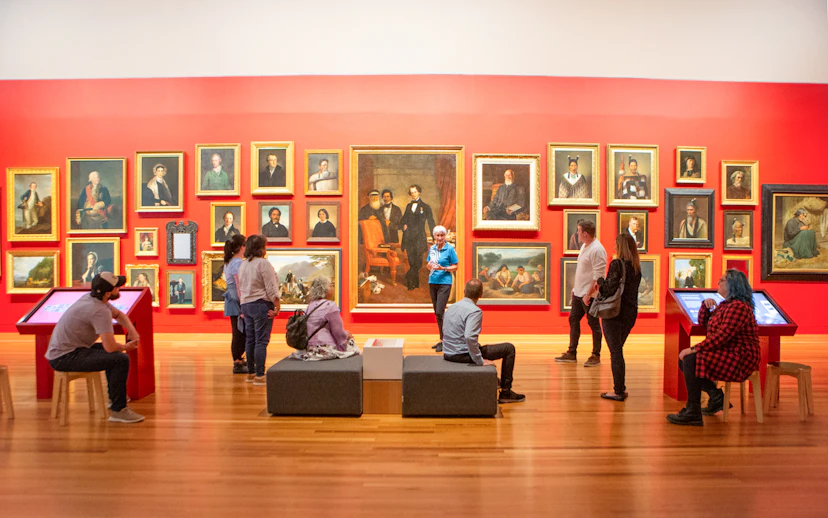
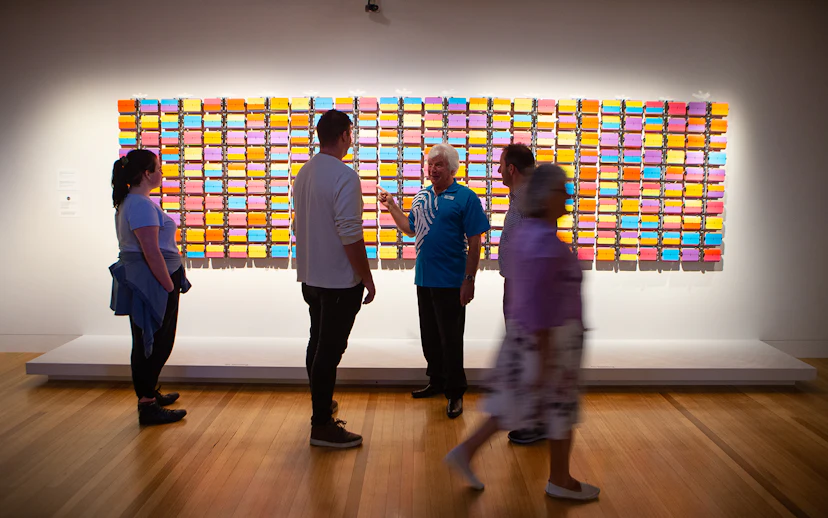
Te Papa is New Zealand’s national museum, best known for the Gallipoli exhibition, Māori and Pacific taonga, and hands-on natural history gathered into one huge waterfront building. It feels bigger and slower-moving than most visitors expect, with six floors, major wings, and enough interactive material to derail a casual “quick look.” The key difference between a rushed visit and a good one is choosing your route early. This guide covers timing, tickets, entrances, and what to prioritise.
If you want the short version before you plan the rest, start here.
Te Papa sits on Wellington’s waterfront in Te Aro, a short walk from Courtenay Place and about 15 minutes on foot from central downtown.
55 Cable Street, Wellington, New Zealand
→ Open in Google Maps
Full getting there guide
Te Papa is straightforward once you arrive: there’s one main public entrance, and most visitors lose time only by stopping at the wrong desk once inside. If you already have a booking, head straight in and sort tours or paid exhibits at the information area.
Full entrances guide
When is it busiest? Weekend late mornings, school-holiday afternoons, and cruise-ship days from October–April are the most crowded, especially around Gallipoli and the family-focused nature galleries.
When should you actually go? After 3pm is the easiest window if you want shorter waits at Gallipoli and more room in the interactive galleries once day tours thin out.
| Visit type | Route | Duration | Walking distance | What you get |
|---|---|---|---|---|
Quick visit | Gallipoli: The Scale of Our War → Mana Whenua → Colossal squid display | 1 to 1.5 hours | Minimal | Covers Te Papa’s most famous highlights and major cultural exhibits in a short visit |
Balanced visit | Full permanent galleries → Te Taiao Nature → Toi Art → Interactive exhibits | 2 to 4 hours | 1–2 km | The ideal pace for exploring New Zealand history, Māori culture, art, and natural history without rushing |
Experience-led visit | Full museum route + guided tour or temporary exhibition | 4 to 5+ hours | 2–3 km | Includes deeper exploration of exhibitions, guided experiences, special displays, cafés, and waterfront breaks |
You’ll need around 2–3 hours to cover Te Papa’s major draws without rushing. That gives you enough time for Gallipoli, Te Taiao, a look through the Māori and Pacific galleries, and a short stop in Toi Art. If you add a guided tour, café break, or spend time reading the personal stories inside Gallipoli, you could easily stay 4 hours. Families often do better with a shorter first pass and a second visit later, since international tickets stay valid for 48 hours.


Explore interactive exhibits and displays on Māori and Pacific cultures in New Zealand’s national museum.
Inclusions #


Inclusions #
Exclusions #
| Ticket type | What's included | Best for | Price range |
|---|---|---|---|
General Museum Entry – International | 48-hour museum entry + permanent galleries + most standard exhibitions | A flexible self-guided visit where you want room to spread the museum over 1 or 2 days | Entry (from NZ$35) ↗ |
Introducing Te Papa Highlights Tour | 60-minute guided tour + museum highlights + live guide | A first visit where you want the main stories fast and don’t want to waste time choosing your own route | Guided tour (from NZ$50) ↗ |
Gallipoli Exhibition Guided Tour | 60-minute Gallipoli tour + live guide + deeper exhibition context | A short visit where Gallipoli is your priority and you want more than the label text provides | Gallipoli tour (from NZ$50) ↗ |
Māori Highlights Tour | 60-minute guided Māori tour + marae visit + cultural context | A visit centred on Māori history and taonga where context matters more than covering every floor | Māori tour (from NZ$50) ↗ |
Private Te Papa Highlights Tour | Private guide + tailored route + flexible pace | A small-group visit where you want a custom route, easier pacing, or a quieter experience | Private tour (from NZ$525 per group) ↗ |
Because it feels separate from the main indoor route, Bush City is easy to miss entirely, especially if you’re moving floor by floor and watching the clock. Step outside for 10 minutes after the nature galleries and you’ll get native plants, harbour air, and a break before heading back in.
Te Papa is a large, multi-floor museum rather than a simple one-way route, and that matters because it’s easy to spend too long in the first galleries and miss entire sections later.
Suggested route: Start with Gallipoli and Te Taiao while your attention is fresh, then move into the Māori and Pacific galleries, save Toi Art for later when the crowds thin out, and use Bush City as a reset rather than leaving it until you’re too tired to go outside.
💡 Pro tip: Start on Level 2 and work outward from the biggest-ticket galleries first — if you begin with art or smaller side spaces, you’ll end up crossing the building twice to get back to Gallipoli and the nature zone.
Get the Te Papa map / audio guide


Attribute — Creator: Wētā Workshop immersive history exhibition
This is the museum’s emotional centre, built around giant 2.4-times-life-size figures and deeply personal stories from the Gallipoli campaign. It’s worth slowing down for the diaries, maps, and sound design, not just the sculptures themselves. Most visitors focus on the dramatic figures and move on too quickly, but the smaller personal objects and letters are what make the exhibition hit hardest.
Where to find it: Level 2, in the Gallipoli exhibition galleries.
Attribute — Species: Mesonychoteuthis hamiltoni
Te Papa’s preserved colossal squid is the only one on public display in the world, and it’s far more impressive in person than in photos. The scale is the point here: stand back first, then move close to study the tentacles and body structure. Many visitors snap a quick photo and leave, but the interpretation around deep-sea life is what turns it from a curiosity into a real highlight.
Where to find it: Level 2, inside Te Taiao | Nature.
Attribute — Type: Contemporary Māori marae
Rongomaraeroa is not just a gallery piece; it’s a living marae used for welcomes, ceremonies, and community events. It’s one of the clearest expressions of Te Papa’s bicultural approach, and the carvings and woven details reward a slower look. Many visitors hesitate at the threshold and never step in, even when it’s open, so they miss one of the museum’s most meaningful spaces.
Where to find it: In the museum’s Māori culture area, on the main guided-tour route.
Attribute — Theme: New Zealand natural history and environment
This is where Te Papa becomes especially family-friendly, with hands-on science, extinct species, geology, and marine life all tied together in one broad zone. The strength of the gallery is its pacing: it mixes large objects, interactives, and quick wins well. Most visitors remember the squid, but the displays on New Zealand’s landscapes and biodiversity are what make the whole section feel complete.
Where to find it: Level 2, next to the museum’s major natural-history displays.
Attribute — Experience type: Interactive seismic simulator
Wellington’s earthquake reality makes this one feel more grounded than a standard science demo. It’s short, but it gives useful context for the country’s geology and the wider nature galleries around it. Many people treat it as a quick novelty and move on, but it works best when you connect it to the exhibits on tectonics, volcanoes, and landscape formation nearby.
Where to find it: Level 2, within Te Taiao | Nature.
Attribute — Collection: New Zealand art
Toi Art gives you a different pace from the museum’s busiest, most dramatic galleries, which is exactly why it’s worth saving time for. You’ll find historic and contemporary New Zealand works, with enough variety that even non-art specialists usually find one room that lands. Most visitors rush through after Gallipoli, but this is one of the best places in the building to slow down and reset.
Where to find it: Level 4, in the main art galleries.
Because it feels separate from the main indoor route, Bush City is easy to miss entirely, especially if you’re moving floor by floor and watching the clock. Step outside for 10 minutes after the nature galleries and you’ll get native plants, harbor air, and a break before heading back in.
Te Papa works well for children because it mixes short, high-impact exhibits with hands-on zones, so you don’t need museum-level patience to enjoy it.
Photography is allowed in most areas of Te Papa, which makes the museum easy to visit without constantly second-guessing the rules. The main distinction is that some light-sensitive or special exhibition spaces can carry tighter restrictions, so check the room signage rather than assuming the same rule applies everywhere. Flash is best avoided in collection areas, and if a temporary exhibition has stricter rules, those are posted at the entrance.
Distance: About 1.5 km — 20-minute walk
Why people combine them: Te Papa gives you New Zealand’s stories indoors, while the cable car and gardens give you the city views and fresh air that balance out a museum-heavy day.
Book / Learn more
Distance: About 4 km — 10-minute shuttle or taxi
Why people combine them: It’s the strongest nature pairing with Te Papa, because you can learn the background in Te Taiao first and then see living native wildlife and forest in the same day.
Book / Learn more
Wellington Museum
Distance: About 1.2 km — 15-minute waterfront walk
Worth knowing: It’s smaller and more local in focus than Te Papa, so it works well if you want Wellington-specific history after the national overview.
Wētā Workshop Tour
Distance: About 6 km — 15–20 minutes by car
Worth knowing: This is the best nearby switch in tone if you want something more creative and film-focused after a history-and-culture-heavy museum visit.
Yes — Te Aro and the waterfront are practical bases if you want Te Papa within walking distance and easy access to Wellington’s restaurants and harbour. The area works especially well for short city stays because you can do the museum, waterfront, and evening dining without needing taxis. If you’re after a quieter neighbourhood feel, though, this part of town can feel busy.
Most visits take 2–3 hours, though it’s easy to stay 4 hours if you add a guided tour, a café break, and the art galleries. Gallipoli, Te Taiao, and the Māori and Pacific sections are the areas that stretch visits longer than people expect.
No, you usually don’t need to book standard entry far in advance. Walk-up entry is normally fine, but it’s smart to pre-book if you want a guided tour or you’re visiting on a summer weekend or a busy cruise-ship day.
Arriving 10–15 minutes early is enough for most visits. Te Papa is not a high-stress timed-entry museum, but giving yourself a small buffer helps if you need to store bags, collect your bearings, or find the tour meeting point.
Yes, but large backpacks are better left in the free cloakroom or lockers. Te Papa is a big museum with some crowded galleries, so travelling light makes a noticeable difference, especially in Gallipoli and the interactive nature areas.
Yes, photography is allowed in most of the museum. The main exception is that some temporary or light-sensitive exhibitions may have stricter rules, so check the signage in each gallery instead of assuming the same policy applies everywhere.
Yes, Te Papa works well for groups, and guided tours are especially useful if you want structure. Public tours are smaller and easier to follow, while private tours make more sense if your group wants a custom route or specific focus.
Yes, Te Papa is one of the easiest major museums to do with children. The colossal squid, earthquake simulator, hands-on science displays, and outdoor Bush City space all help break up the quieter galleries and keep younger visitors engaged.
Yes, the museum is wheelchair accessible throughout, with elevators connecting all floors. Free wheelchairs are available from the information desk, which helps if you want to pace a long visit more comfortably.
Yes, there are on-site cafés and plenty of nearby food options in Te Aro and along the waterfront. The museum cafés are convenient, but the lunch rush is busiest around 12 noon–1:30pm, so it’s worth timing your break around that.
Yes, Gallipoli: The Scale of Our War is still one of Te Papa’s main drawcards. It remains part of the core museum experience and is included with general admission, which is why it’s still the section that fills up first on busy days.
Yes, international general admission is valid for 48 hours. That makes a real difference at a museum this size, because you can do the highlights on day 1 and come back for art, Pacific culture, or anything you missed on day 2.
No, not always. General admission covers the museum’s main galleries and standard exhibitions, but some temporary blockbusters and premium experiences have their own separate ticket, so check what’s included before you book.